

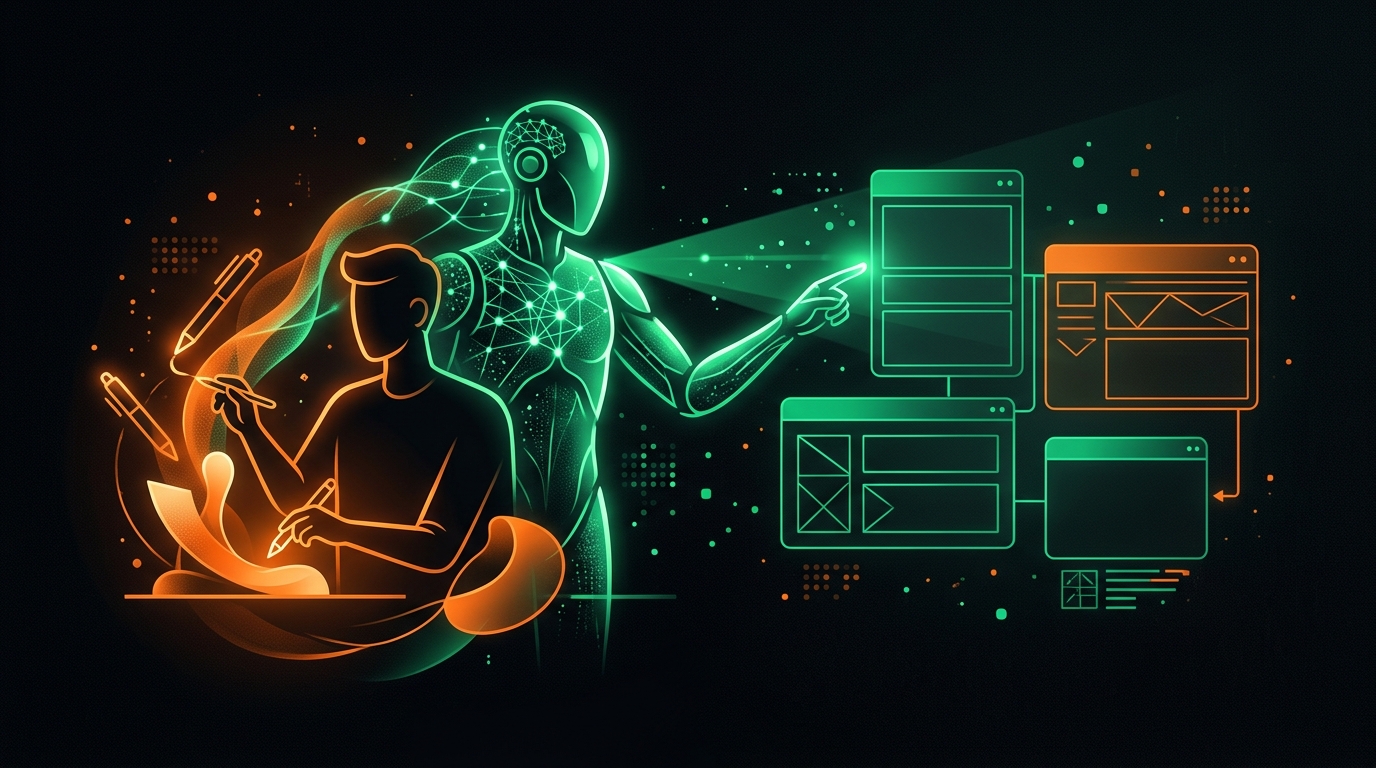
AI as a Creative Copilot: How to Use It Without Losing Your Voice
Yes, creators should use AI for the slow, repetitive parts of publishing, not for the parts that make the work yours. Here's where it helps and where it quietly ruins a channel.
By Volha Kiparuk
Yes, creators should use AI, but only for the slow, repeating parts of publishing, not for the parts that make a video yours. Use it to draft a description, sort a thousand comments, or rough out twenty title options. Don't hand it the idea, the point of view, or the final call. The line I keep coming back to is simple: AI should save you time on the work nobody watches your channel for, so you have more of it for the work they do.
I want to be honest about why this matters, because it's easy to get wrong in a way you don't notice for months. The first time I let a tool write a whole description for me, I pasted it without really reading it. It was fine. It was also nothing, competent, generic, the kind of paragraph that could sit under anyone's video. A viewer told me weeks later that my older descriptions "sounded more like me." She was right, and I felt it. That's the trap. AI rarely fails loudly. It fails by being acceptable and slowly sanding off the edges that made people choose you.
What should creators use AI for, and not?
Use AI for the tasks that are mechanical, high-volume, or just tedious: reading hundreds of comments and summarizing the sentiment, generating a batch of title or thumbnail options to react to, drafting a first-pass description you then rewrite, pulling keywords, transcribing audio, translating metadata for another language. These are jobs where speed helps and a machine genuinely is faster than you. AI can read 1,000 comments in seconds and tell you the recurring complaint; you can't, not without losing an evening.
Don't use AI for the things that are the channel. Don't let it pick what you make a video about, decide what's worth saying, or write the script you read in your own voice. People rate the same piece of creative work as less authentic the moment they learn a machine made it, even when they couldn't tell the difference a minute earlier. Audiences can't always name why something feels hollow, but they react to it. The judgment calls are the moat. Give those away and you're competing on output volume, which is a race nobody enjoys winning.
A rough rule: if a task would be the same no matter who did it, AI can help. If the task only works because it's you doing it, keep it.
Does using AI hurt authenticity?
It depends entirely on which part you hand over. Using AI to summarize your comments or draft tags doesn't touch authenticity, nobody subscribed for your tag formatting. Using AI to generate the actual content, the opinions, the story, does, because authenticity is the human judgment, and that's the exact thing you removed.
The useful question isn't "did I use AI", it's "is the part people came for still mine?" A description written by a tool and then edited by you until it sounds right is yours. A description you pasted without reading is not, and over a year of pasting, your channel starts to sound like every other channel that did the same. The damage isn't one bad post. It's the slow average.
This is also why the "AI writes everything" path is a dead end for growth, not just for soul. When the words are free and infinite, they stop being a signal. The scarce thing, the only scarce thing, is a real person with a real point of view. Protect that and AI buys you time. Spend it and AI is just a faster way to blend in.
Will AI make all content the same?
It will make lazy content the same, and there's going to be a lot of it. When thousands of creators feed the same prompts to the same models, they get back similar titles, similar hooks, similar safe little paragraphs. That's not a prediction; it's already visible in any crowded niche, where half the videos read like they share a ghostwriter.
The good news for anyone willing to do the human part: as the generic floods in, the specific stands out more, not less. The fix isn't to avoid AI. It's to make sure the thing AI can't fake, your actual experience, the opinion you'd defend, the detail only you noticed, stays in the work. Let the tool handle the parts that were always interchangeable, and put your hours into the parts that never were.
How do I keep my voice when a tool drafts my metadata?
Treat every AI draft as a starting point you must edit, not an answer you accept. Read it out loud. If it doesn't sound like something you'd actually say, change it until it does, or throw it out. The discipline that protects your voice is approval: you, reading and editing every word before it goes live. A tool that drafts and then waits for your sign-off keeps you in control; a tool that publishes on its own quietly takes the wheel.
Better still is a tool that learns from your past work instead of a generic template, so the draft already leans toward how you write rather than toward the average of the internet. That's the part most worth looking for.
This is where I'll be specific about the tool I work on, because the whole point of this piece is honesty over hype. VidSeeds.ai is a pre-upload SEO tool: before you publish, it analyzes the actual video, the speech, the scenes, the meaning, and learns your author voice from your own past titles and descriptions, then drafts titles, a description, tags, chapters, and a thumbnail for YouTube, TikTok, Instagram, Facebook, LinkedIn, and X, in any of 85 languages. You review and edit everything before anything publishes, nothing goes live without your approval. It does not generate the video, write your script, or decide what you should make; it takes the metadata busywork off your plate so your voice is the part that ships. It's an independent alternative to vidIQ and TubeBuddy, and you can start free with 100 Seeds, no card. If you want the longer version of how the pre-upload video optimization works, that page walks through it.
The honest limit: a tool like this won't save a video nobody wants to watch, and it can't hand you a point of view. It makes the publishing chores faster. The ideas, and the final yes, stay yours.
The hybrid workflow, in plain terms
The version of "AI copilot" that actually works isn't dramatic. You still pick the idea, that's you. You might brainstorm angles against a model and keep the two that are actually yours. You film and edit like normal, because that's where your craft lives. Then, instead of spending an hour fighting the title, description, tags, and thumbnail at midnight, you let a tool draft them in a minute and you spend ten minutes editing the draft until it sounds right. The time you save doesn't have to become more videos. It can become a better video, or an evening off. Both are wins; the second one is underrated.
Frequently Asked Questions
Should YouTubers use AI tools at all?
Yes, for the repetitive, high-volume parts of publishing, comment triage, keyword research, drafting metadata, transcription, translation, where a machine is genuinely faster. Keep the creative judgment (ideas, opinions, your script and your voice) human. The split that works is: AI does the work nobody subscribes for, you do the work they do.
Does AI-assisted content hurt my channel's authenticity?
Only if you let AI write the part people actually came for. Using it to summarize comments or draft tags is invisible to your audience. Using it to generate your opinions or your story is not, because authenticity is the human judgment you just removed. Edit every draft until it sounds like you, and authenticity stays intact.
Will AI make every channel sound the same?
It makes lazy, prompt-and-paste content sound the same, and there's a flood of it. That actually makes genuinely specific, personal work stand out more. The defense isn't avoiding AI; it's keeping the thing AI can't fake (your real experience and point of view) in the video while AI handles the interchangeable parts.
How do I keep my voice if a tool drafts my titles and descriptions?
Treat the draft as a first pass you must edit, never a finished answer. Read it out loud, and rewrite anything that doesn't sound like you. Prefer tools that require your approval before publishing and that learn from your own past writing rather than a generic template, so the starting point already leans toward your voice.
Continue Reading
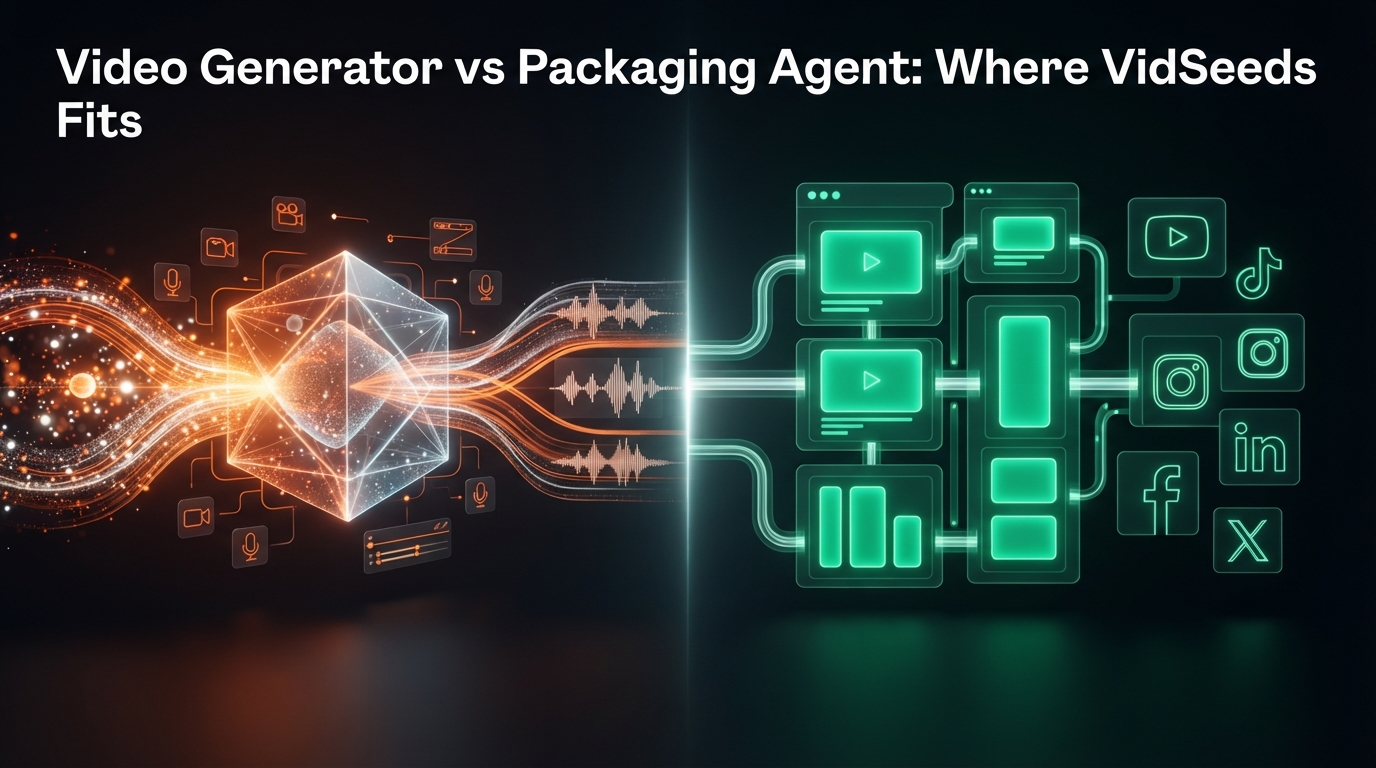
Video Generator vs Packaging Agent: Where VidSeeds Fits
AI video generators make footage. VidSeeds.ai helps grow a YouTube channel by packaging the finished video first for its next upload, with supporting destinations available after review.

VidSeeds 3.0: The Trainable Video Content Agent Is Here
VidSeeds 3.0 turns the platform into a trainable video content agent that learns your voice, makes content decisions, and improves from every publication. Brand DNA, Founder-Voice Match, Retention Learning Loop.
Is VidSeeds Safe for Your YouTube Channel? Here's What You Keep
VidSeeds connects to YouTube through Google OAuth, never your password, and publishes nothing without your confirmation. Here's exactly what access you give and what stays yours.